
Non-Alcoholic Pitcher Sangria for Parties & Crowds

Hosting a party and wondering what to serve besides another cooler full of soda? This non-alcoholic pitcher sangria gives everyone something colorful to sip, without leaving you squeezing individual drinks while your guests are having all the fun.
It’s fruity, bright, and easy to prepare ahead. Grape juice provides the deep red base, orange and lemon keep things lively, and sparkling water adds a refreshing finish. Sliced fruit makes the pitcher look party-ready with very little fuss.
Best of all, you don’t need alcohol-free wine, special syrups, or a cocktail shaker. Below, you’ll find the exact recipe, amounts for bigger groups, and the little serving tricks that make a big difference when people come back for refills.
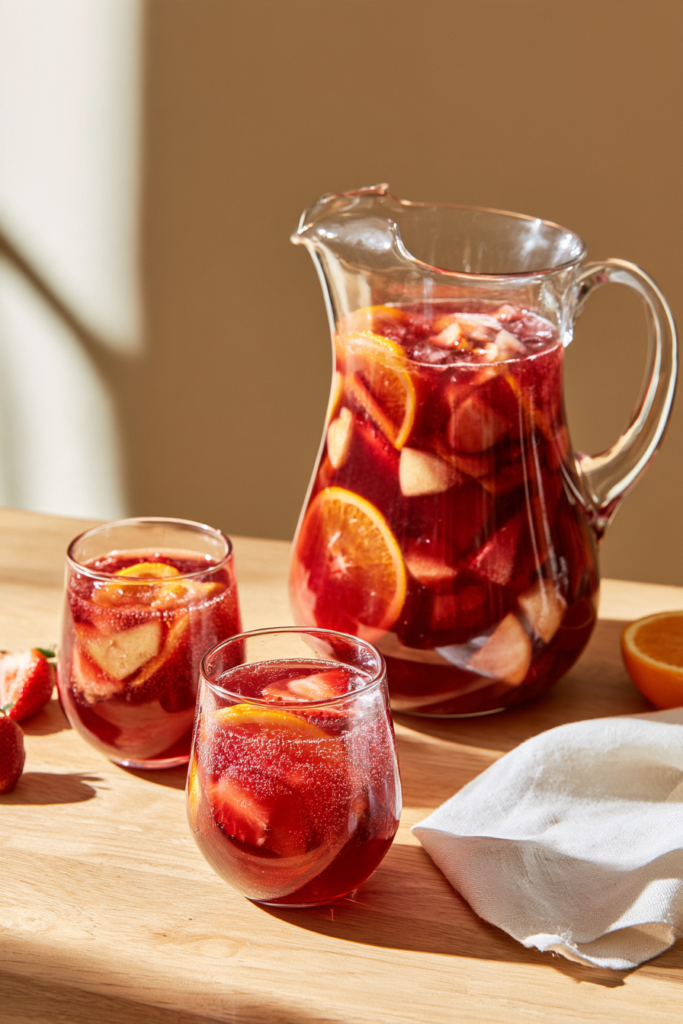
What Is Non-Alcoholic Sangria?
Traditional sangria combines wine with fruit and, depending on the recipe, other spirits or sweeteners. This virgin sangria uses fruit juices and sparkling water to create a similar fruit-filled pitcher drink without adding wine or liquor.
It won’t taste exactly like wine-based sangria. Expect a juicy, citrusy drink with gentle bubbles and a refreshing tart edge, rather than the dry complexity of red wine.
That distinction helps when choosing ingredients. The goal is balance: enough grape juice for richness, enough citrus for brightness, and enough sparkling water to keep each glass from tasting like straight juice.
Easy Non-Alcoholic Pitcher Sangria Recipe
Servings: 8, about 1 cup of liquid each, plus fruit and ice
Liquid yield: 8 cups, approximately 1.9 liters, before fruit
Prep time: 15 minutes
Chill time: 2–4 hours
Equipment: A pitcher holding at least 3 liters, a long spoon, measuring cups, a knife, and a cutting board
Use a roomy pitcher. Although the liquid measures about 1.9 liters, the fruit takes up extra space, and you’ll want room to stir without decorating your countertop.
Ingredients
- 3 cups chilled 100% red grape juice
- 1 cup chilled 100% cranberry juice, unsweetened—not cranberry juice cocktail
- 1 cup chilled orange juice, preferably pulp-free
- ¼ cup freshly squeezed lemon juice
- 2¾ cups chilled plain sparkling water
- 1 medium orange, washed, thinly sliced, and cut into half-moons
- 1 medium apple, washed, cored, and cut into small pieces
- 1 cup strawberries, washed, hulled, and sliced
- Ice, for individual glasses
Optional sweetness adjustment: 1–2 tablespoons simple syrup, added only after tasting. This adds a small amount to the stated yield.
Unsweetened cranberry juice is quite tart, which helps balance the grape juice. If you use sweetened cranberry juice cocktail instead, expect a sweeter drink and skip the optional syrup at first.
Instructions
- Prepare the fruit. Slice the orange thinly, remove any visible seeds, and chop the apple into pieces small enough to spoon into a glass. Hull and slice the strawberries.
- Combine the juices. Pour the grape juice, cranberry juice, orange juice, and lemon juice into the pitcher. Stir until combined.
- Add the fruit. Gently stir in the orange, apple, and strawberries. Don’t mash them; you want attractive pieces rather than fruit pulp.
- Cover and refrigerate. Chill for 2–4 hours so the flavors can mingle. Keep the sparkling water separate for now.
- Finish just before serving. Pour in the chilled sparkling water and stir gently once or twice.
- Taste and adjust. If the drink is too tart for your taste, stir in 1 tablespoon simple syrup. Taste again before adding the second tablespoon.
- Serve over ice. Spoon a little fruit into each glass, add ice, and pour in the sangria.
The easiest hosting shortcut: Mix the juice base ahead, then add the bubbles when guests arrive. It’s one small step that keeps the drink tasting freshly poured.
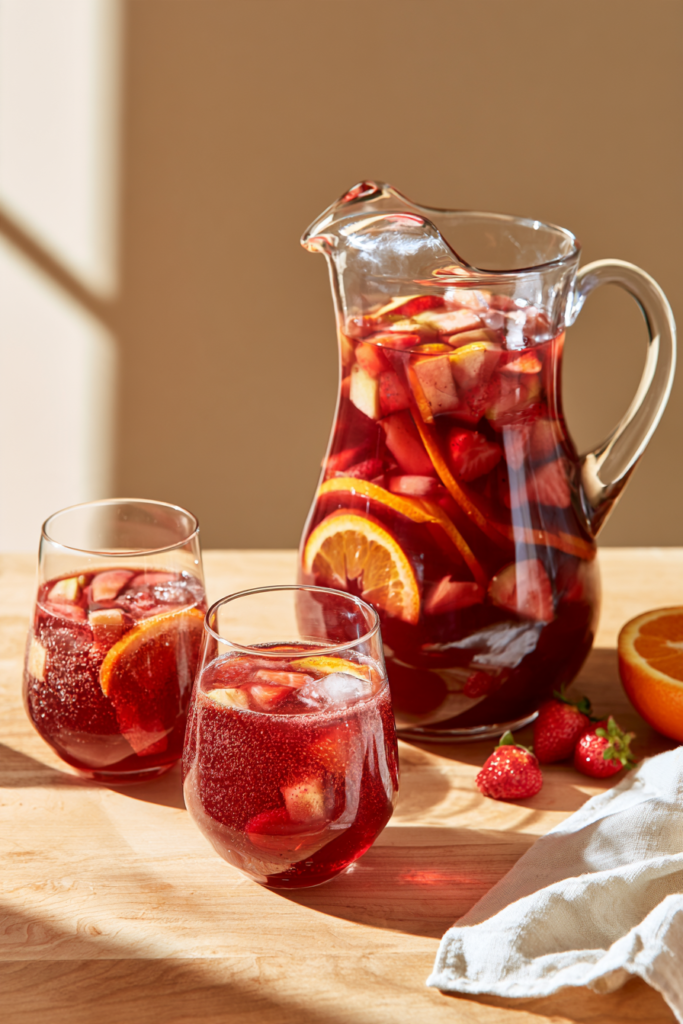
Why These Ingredients Work
Grape Juice Gives the Pitcher Its Rich Base
Red grape juice provides the familiar dark color and fruity body. Choose 100% juice rather than a grape-flavored drink so you’re starting with a clear, predictable ingredient.
Grape juice is naturally sweet, which is why this recipe doesn’t start with added sugar. You can always sweeten a tart pitcher; fixing an overly sweet one takes more adjusting.
Cranberry and Citrus Keep It Balanced
Unsweetened cranberry juice brings a tart note that prevents the grape juice from taking over. Orange juice softens that sharpness, while lemon adds a clean, bright finish.
Fresh lemon juice is especially useful here. It adds acidity without requiring a lot of extra liquid or sweetness.
Sparkling Water Makes It Refreshing
Plain sparkling water lightens the juice mixture without adding more sugar. Lemon or lime sparkling water also works if it’s unsweetened and you enjoy that flavor.
Lemon-lime soda or ginger ale will give you a sweeter, punch-style result. They’re workable substitutions, but taste before adding any syrup.
The Best Fruit for Virgin Sangria
Apples, oranges, and strawberries make a useful starting trio because they bring different colors, textures, and flavors. The apple stays pleasantly crisp, orange slices look beautiful against the red juice, and strawberries add a softer berry note.
Want to use what’s already in the fridge? Replace the strawberries with an equal volume of sliced peaches, raspberries, or halved seedless grapes.
Keep the fruit pieces manageable. Huge wedges might look dramatic in the pitcher, but they’re awkward in a glass. Nobody should need a fork-and-knife strategy to enjoy their drink.
Fruit to Add Close to Serving
Very ripe peaches, raspberries, and other delicate fruit can soften quickly. Add them near serving time if you want them to keep their shape.
For longer chilling, let the apple infuse in the juice base and add the berries later. You can also add orange slices during the final hour to limit any bitterness from the peel.
How Much Sangria Do You Need for a Party?
The recipe makes eight 1-cup servings of liquid. Fruit and ice take up additional space in the glass, so use glasses larger than 8 ounces if you plan to serve a full cup of sangria in each.
For planning purposes, allow one to two servings per person when you’re also offering other drinks. A longer party or a sangria-loving crowd may need more.
| Ingredient | 8 servings | 16 servings | 24 servings |
|---|---|---|---|
| Red grape juice | 3 cups | 6 cups | 9 cups |
| Unsweetened cranberry juice | 1 cup | 2 cups | 3 cups |
| Orange juice | 1 cup | 2 cups | 3 cups |
| Lemon juice | ¼ cup | ½ cup | ¾ cup |
| Sparkling water | 2¾ cups | 5½ cups | 8¼ cups |
| Medium oranges | 1 | 2 | 3 |
| Medium apples | 1 | 2 | 3 |
| Sliced strawberries | 1 cup | 2 cups | 3 cups |
| Total liquid before optional syrup | 8 cups | 16 cups | 24 cups |
For 12 guests having two servings each, make the 24-serving batch. For 24 guests having two servings each, you’ll need twice that amount.
Divide bigger batches among pitchers or food-safe containers. Twenty-four servings equal about 5.7 liters of liquid before fruit, so a small drink dispenser won’t have enough room.
Need a second pitcher option? These party mocktails for large gatherings include more crowd-sized recipes.
How to Make Sangria Ahead of Time
The Day Before
Combine the four juices in a covered container and refrigerate. Chill the sparkling water separately, and make sure you have enough ice and serving glasses.
Leaving the fruit out overnight gives you more control over its texture and keeps citrus peel from sitting in the drink for too long.
Two to Four Hours Before the Party
Add the prepared apple, orange, and strawberries to the juice mixture, then cover and refrigerate again. If your berries are particularly ripe, hold them back until closer to serving.
Right Before Guests Arrive
Add sparkling water only to the pitcher you’re about to serve. Keep any backup juice-and-fruit mixture refrigerated, and add its sparkling water when it’s time for a refill.
This staggered approach is especially helpful for a large gathering. The second pitcher gets its own fresh bubbles instead of sitting around going flat.
Easy Sangria Variations for Different Occasions
White Grape and Peach Sangria
Replace the red grape juice with 3 cups white grape juice. Replace the cranberry juice with 1 cup chilled, unsweetened peach herbal tea, brewed according to the package and cooled.
Swap the strawberries for 1 cup sliced peaches. Keep the orange juice, lemon juice, sparkling water, apple, and orange amounts unchanged.
For smaller servings with the same fruity theme, try these peach mocktails.
Apple-Cranberry Fall Sangria
Replace the grape juice with 3 cups pasteurized apple cider. Replace the strawberries with 1 cup diced pear, and add one cinnamon stick during the refrigerated infusion.
Remove the cinnamon stick before serving. Start with a two-hour infusion, then taste; you want a gentle spice note rather than cinnamon taking over the whole pitcher.
Build an autumn drink menu around this pitcher and these cozy fall mocktails.
Berry-Lime Party Sangria
Replace the lemon juice with ¼ cup fresh lime juice. Use ½ cup sliced strawberries and ½ cup raspberries in place of the original cup of strawberries.
Add the raspberries just before serving so they keep more of their shape. A few lime wheels make an easy optional garnish.
Serving and Storage Tips for a Crowd
Serve ice in a separate bucket so guests can add it to their glasses. Ice left in the pitcher gradually melts and dilutes all the careful flavor balancing you’ve done.
If you’re using a dispenser with a narrow spigot, strain the fruit from the liquid and serve it in a chilled bowl alongside the drinks. Floating apple pieces have a remarkable talent for finding the smallest opening and blocking it.
Keep the fruit-filled drink refrigerated at 40°F or below until serving. For a buffet, set out smaller quantities and keep refills cold. FDA guidance limits unrefrigerated perishable produce to two hours, or one hour when temperatures exceed 90°F. Discard portions that exceed those limits. FDA
For best flavor and fruit texture, plan to enjoy properly refrigerated leftovers by the next day. The bubbles will fade, so you can add a fresh splash of sparkling water to each glass.
More Mocktails for Your Next Gathering
Explore all 300+ easy mocktail recipes for every season and occasion.
Frequently Asked Questions About Non-Alcoholic Sangria
Can you make non-alcoholic sangria without alcohol-free wine?
Yes. Grape juice, cranberry juice, orange juice, lemon juice, and sparkling water make a fruity sangria-style drink without wine. Fresh fruit adds flavor during chilling, while citrus and unsweetened cranberry juice balance the sweetness.
How far in advance can you make virgin sangria?
Mix the juice base up to one day ahead and keep it covered in the refrigerator. Add fruit 2–4 hours before serving, then add sparkling water immediately before pouring. This keeps the fruit fresher and preserves the bubbles.
What can I use instead of sparkling water in sangria?
Use an equal amount of chilled still water for a non-fizzy version. Unsweetened citrus sparkling water is another easy option. Ginger ale or lemon-lime soda also works, but makes the drink sweeter, so leave out the optional syrup until you’ve tasted it.
How do you fix sangria that is too sweet or too tart?
First, taste the finished drink after adding the measured sparkling water. For an overly sweet pitcher, add lemon juice 1 teaspoon at a time or sparkling water ¼ cup at a time. For an overly tart pitcher, add simple syrup 1 tablespoon at a time. Stir gently and taste after every adjustment.
What is the best way to keep pitcher sangria cold without watering it down?
Start with chilled ingredients, refrigerate the pitcher until serving, and put ice in individual glasses. For longer gatherings, serve one small pitcher at a time while keeping the rest refrigerated.
Reserve a little of the juice base before adding fruit, freeze it in an ice tray, and use those cubes in glasses for extra chilling without adding plain water. That tiny bit of planning makes the last glass just as welcome as the first.