
7 High-Protein Vegan Freezer Meals for Busy Weeknights

Ever open the fridge at dinnertime, stare at a few vegetables, and wish someone had already cooked? Same energy as opening your inbox on a Monday. You know something needs doing, but you’d really prefer it were done.
That’s where high-protein vegan freezer meals come in. A little cooking now gives you homemade lunches and dinners you can pull out when life gets busy. And you don’t have to eat the same lentil soup five days in a row.
Below, you’ll find seven plant-based freezer meal recipes with exact ingredients, serving sizes, cooking instructions, and reheating tips. There’s cozy chili, creamy curry, portable burritos, and a pasta bake that makes excellent use of a humble block of tofu.
You can cook one recipe for the week or choose two to start a small freezer stash. No heroic Sunday cooking marathon required.
Quick Guide: Which Vegan Freezer Meal Should You Make?
Each recipe makes four servings, except the burritos, which make six. The protein ranges below are approximate per serving, calculated from typical ingredient values. Brands, drained weights, and portion sizes change the total; optional toppings and sides aren’t included. These are recipe estimates, not laboratory-tested nutrition values.
| Meal | Servings | Estimated protein per serving | Best for |
|---|---|---|---|
| Lentil and black bean chili | 4 | 23–26 g | Budget-friendly dinners |
| Tofu and chickpea curry | 4 | 21–27 g | Saucy meals with rice |
| Black bean and tofu burritos | 6 burritos | 20–26 g | Grab-and-go lunches |
| Tempeh and quinoa taco bowls | 4 | 31–36 g | Meal prep with fresh toppings |
| Lentil pasta bake with tofu ricotta | 4 | 30–36 g | Comfort food |
| Peanut tofu and edamame rice bowls | 4 | 29–34 g | A change from tomato-based meals |
| White bean, lentil, and vegetable stew | 4 | 22–25 g | Cozy lunches |
Ingredient note: All bean cans below are 15 ounces (425 g) before draining and yield approximately 1½ cups of drained beans. Use plain, unsweetened plant milk where specified, and check that broth, tortillas, pasta, and sauces are vegan.
How to Freeze Vegan Meals Without Losing Flavor
For these recipes, plan to use frozen portions within two to three months for good eating quality. That’s a practical quality target, rather than a point when continuously frozen food suddenly becomes unsafe.
Divide cooked food into shallow containers and refrigerate promptly, within two hours of cooking—or one hour if the temperature is above 90°F. Don’t leave a big pot on the counter waiting for it to reach room temperature. Keep your refrigerator at 40°F or below and freezer at 0°F or below.
Use refrigerated leftovers within three to four days, or freeze them. Thaw portions in the refrigerator and reheat leftovers to 165°F in the center, checking more than one spot when microwaving. These practices follow USDA leftover food-safety guidance.
Leave about an inch of headspace in containers holding soup, stew, or curry. Freeze burritos individually, and keep crisp or delicate toppings—lettuce, avocado, cucumber, and fresh herbs—separate until serving.
One small habit makes a big difference: label every container with the meal name, cooking date, and number of servings. “Mystery orange dinner” gets much less exciting after the third appearance.
1. Lentil and Black Bean Chili
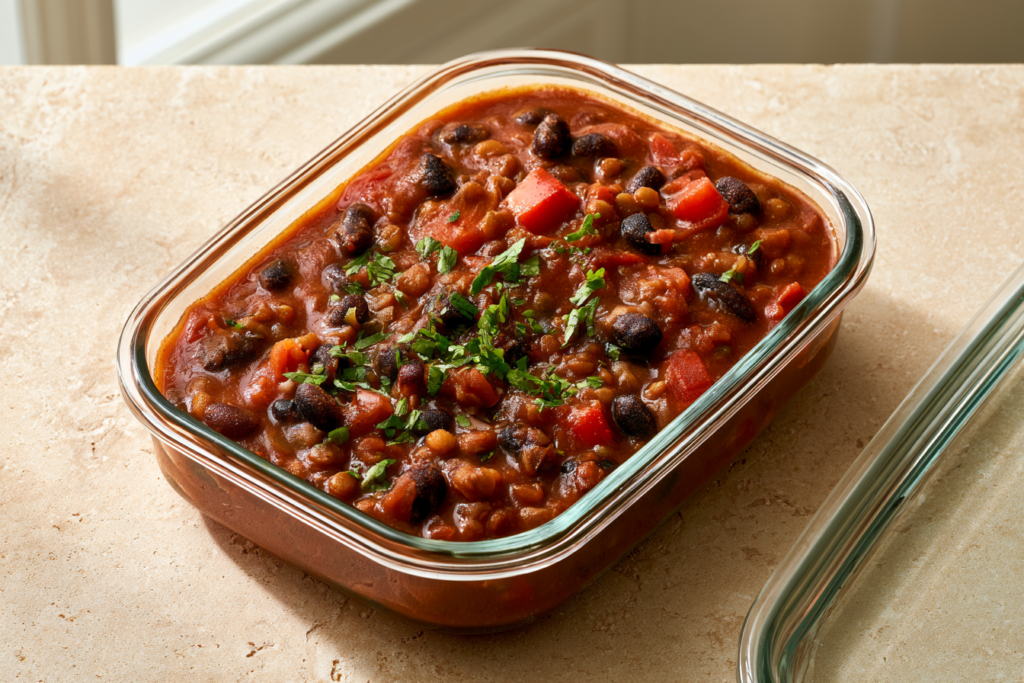
This is a good place to start if you want cheap vegan freezer meals with plenty of protein. Lentils thicken the chili, black beans give it a hearty bite, and smoked paprika brings warmth without needing a long ingredient list.
Serve it as written, or add rice or a baked potato when you want a bigger meal. Those extras aren’t included in the protein estimate.
Servings: 4
Prep: 15 minutes
Cook: 35–40 minutes
Estimated protein: 23–26 g per serving
Ingredients
- 1 tablespoon olive oil
- 1 medium yellow onion, diced
- 1 large bell pepper, diced
- 3 garlic cloves, minced
- 2 tablespoons tomato paste
- 1 tablespoon mild chili powder
- 2 teaspoons ground cumin
- 1 teaspoon smoked paprika
- 1 cup (190 g) dry brown or green lentils, rinsed
- 2 cans black beans, drained and rinsed
- 1 can (28 ounces/794 g) crushed tomatoes
- 3 cups (720 ml) low-sodium vegetable broth
- ½ teaspoon salt
- ¼ teaspoon black pepper
Instructions
- Heat the oil in a large pot over medium heat. Add the onion and bell pepper; cook for 6–8 minutes until softened.
- Add the garlic, tomato paste, chili powder, cumin, and paprika. Stir for 1 minute.
- Add the lentils, black beans, tomatoes, broth, salt, and pepper. Bring to a boil.
- Reduce the heat and simmer partially covered for 30–35 minutes, stirring occasionally, until the lentils are tender. Add water ¼ cup at a time if the chili becomes too thick before the lentils finish cooking.
- Divide into four equal portions.
Freezing and Reheating
Chill promptly in shallow containers, then freeze in individual portions. Thaw overnight in the refrigerator and reheat in a saucepan over medium-low heat, stirring regularly. Add a splash of water if needed and heat to 165°F throughout.
Flavor tip: Add a squeeze of lime after reheating. It brightens the tomatoes and smoky spices without adding another cooking step.
2. Tofu and Chickpea Coconut Curry
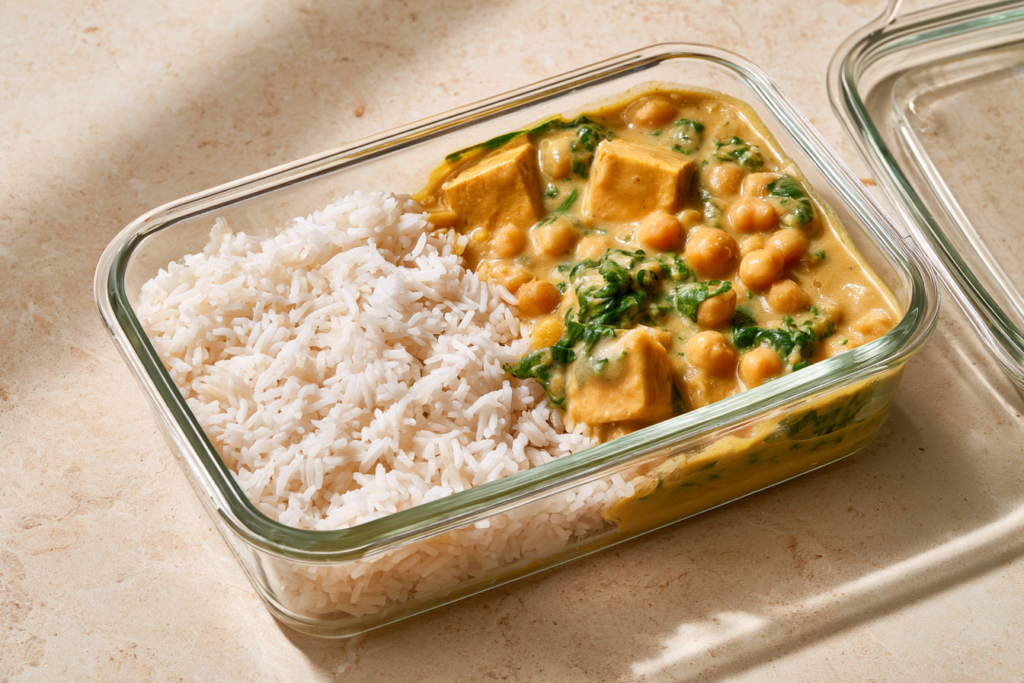
Creamy curry is especially useful for plant-based freezer meal prep because the sauce helps the ingredients stay moist when reheated.
This version combines tofu and chickpeas, so the meal doesn’t depend on a few scattered beans for its protein. A little light coconut milk gives the sauce richness, while spinach adds color.
Servings: 4
Prep: 15 minutes
Cook: 25 minutes
Estimated protein: 21–27 g per serving, including rice
Ingredients
- 1 cup (185 g) dry basmati rice
- 1¾ cups (420 ml) water, or the amount specified on your rice package
- 1 tablespoon olive oil
- 1 medium onion, diced
- 3 garlic cloves, minced
- 1 tablespoon grated fresh ginger
- 1½ tablespoons mild curry powder
- 1 block (14 ounces/397 g) extra-firm tofu, drained and cut into ¾-inch cubes
- 1 can chickpeas, drained and rinsed
- 1 can (14.5 ounces/411 g) diced tomatoes, with juices
- 1 can (13.5 ounces/400 ml) light coconut milk
- ½ cup (120 ml) low-sodium vegetable broth
- 4 cups (120 g) fresh spinach
- ½ teaspoon salt
Instructions
- Cook the rice with the measured water according to its package instructions.
- Meanwhile, heat the oil in a large saucepan over medium heat. Cook the onion for 5–6 minutes.
- Add the garlic, ginger, and curry powder. Stir for 30 seconds.
- Add the tofu, chickpeas, tomatoes, coconut milk, broth, and salt. Bring to a gentle simmer.
- Cook uncovered for 15–20 minutes, stirring gently, until the sauce thickens slightly.
- Stir in the spinach and cook for 2 minutes until wilted.
- Divide the rice and curry equally among four portions.
Freezing and Reheating
Store rice and curry in separate compartments or containers if possible, and chill both promptly. Thaw in the refrigerator. Microwave in a vented microwave-safe container in short intervals, stirring the curry and fluffing the rice between intervals, until both reach 165°F.
Texture note: Frozen tofu often becomes firmer and more porous. In a curry, that means it can soak up more sauce.
3. Black Bean and Tofu Freezer Burritos
A freezer burrito is a very useful answer to “I need lunch, and I needed it ten minutes ago.”
The trick is keeping the filling fairly dry. Watery salsa inside a burrito can turn the tortilla soggy, so serve extra salsa on the side after reheating.
Servings: 6 large burritos; 1 burrito per serving
Prep: 20 minutes
Cook: 20 minutes
Estimated protein: 20–26 g per burrito
Ingredients
- 6 large, 10-inch vegan flour tortillas
- 1 block (14 ounces/397 g) extra-firm tofu, drained, pressed, and crumbled
- 2 cans black beans, drained and rinsed
- 1 cup cooked brown rice (about 195 g)
- 1 tablespoon olive oil
- 1 medium onion, finely diced
- 1 bell pepper, finely diced
- 2 teaspoons ground cumin
- 1 teaspoon mild chili powder
- ½ teaspoon smoked paprika
- ½ teaspoon garlic powder
- ½ teaspoon salt
Instructions
- Heat the oil in a large skillet over medium heat. Add the onion and pepper; cook for 6–8 minutes.
- Add the tofu, cumin, chili powder, paprika, garlic powder, and salt. Cook for 8–10 minutes, stirring, until excess moisture evaporates.
- Stir in the beans and cooked rice. Cook for 2–3 minutes until hot.
- Spread the filling in shallow containers and refrigerate promptly. Assemble the burritos once the filling is chilled.
- Warm the tortillas briefly according to package directions so they bend without cracking.
- Divide the filling evenly among the six tortillas. Fold in the sides, then roll tightly.
Freezing and Reheating
Wrap each burrito in parchment, then foil, and place in a freezer bag. Thaw overnight in the refrigerator. Remove all wrapping and microwave on a microwave-safe plate in 1-minute intervals, turning between intervals, until the center reaches 165°F.
For a crisper finish, transfer the heated burrito to a dry skillet and toast briefly on both sides.
Keep out of the freezer filling: Lettuce, avocado, and fresh tomato. Add them alongside your hot burrito instead.
4. Tempeh and Quinoa Taco Bowls
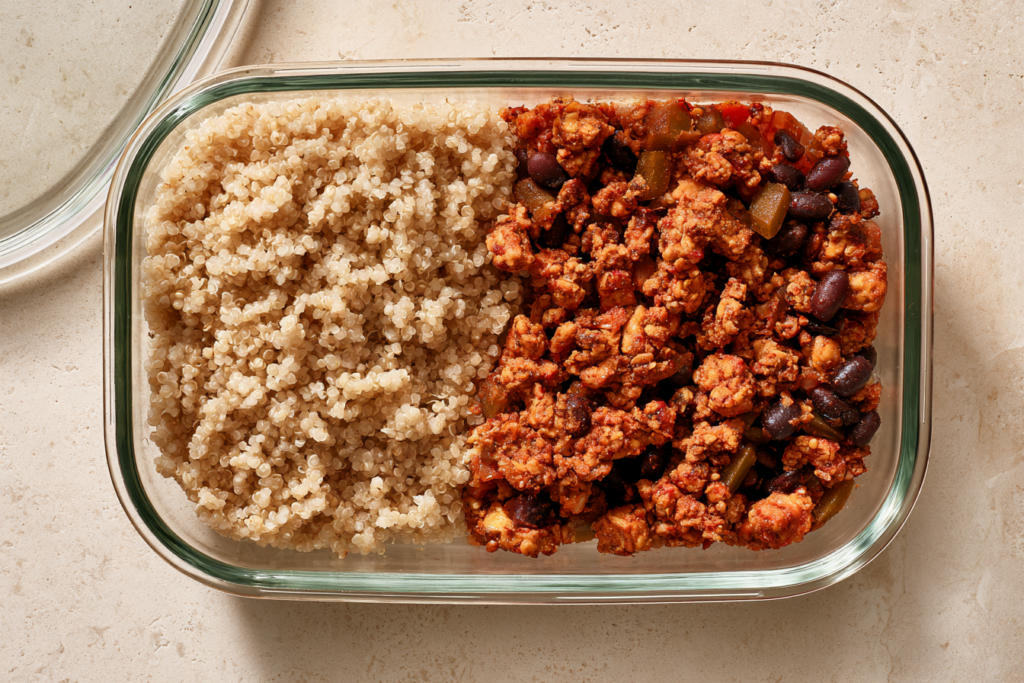
These bowls are for the nights when you want taco flavors but don’t feel like assembling anything.
Tempeh brings a firm bite, quinoa makes a useful grain base, and black beans stretch the recipe into four generous portions. Fresh toppings can make the same freezer meal feel different each time.
Servings: 4
Prep: 15 minutes
Cook: 25 minutes
Estimated protein: 31–36 g per serving
Ingredients
- 1 cup (170 g) dry quinoa, rinsed
- 2 cups (480 ml) water
- 2 packages plain tempeh, 8 ounces (227 g) each, crumbled
- 1 can black beans, drained and rinsed
- 1 tablespoon olive oil
- 1 medium onion, diced
- 1 bell pepper, diced
- 2 tablespoons tomato paste
- 2 teaspoons ground cumin
- 2 teaspoons mild chili powder
- ½ teaspoon smoked paprika
- ¾ cup (180 ml) low-sodium vegetable broth
- ½ teaspoon salt
Instructions
- Combine the quinoa and water in a saucepan. Bring to a boil, cover, and simmer over low heat for about 15 minutes, or follow package directions. Remove from the heat and rest, covered, for 5 minutes.
- Heat the oil in a large skillet over medium heat. Add the onion and pepper; cook for 6–8 minutes.
- Add the crumbled tempeh and cook for 5 minutes, stirring.
- Stir in the tomato paste, cumin, chili powder, paprika, broth, and salt.
- Add the black beans and simmer for 8–10 minutes, stirring occasionally, until the mixture is moist but no longer soupy. Follow any additional cooking requirements on your tempeh package.
- Divide the quinoa and tempeh mixture equally among four containers.
Freezing and Reheating
Chill promptly and freeze in individual portions. Thaw in the refrigerator, add 1 tablespoon water per serving, and microwave covered with a vent, stirring between intervals, until the meal reaches 165°F.
Serving idea: Add shredded cabbage, salsa, or lime after reheating. A crunchy topping is especially welcome with a soft grain bowl.
5. Lentil Pasta Bake with Tofu Ricotta
If your idea of meal prep includes something bubbly from the oven, this one belongs on the list.
The tofu ricotta is simple: crumble, season, and mix. There’s no need to buy vegan cheese, and lentil pasta gives the dish another source of protein.
Servings: 4
Prep: 20 minutes
Cook: About 30 minutes, plus boiling the pasta
Estimated protein: 30–36 g per serving
Ingredients
- 8 ounces (227 g) dry red lentil penne
- 1 block (14 ounces/397 g) extra-firm tofu, drained and pressed
- ¼ cup (15 g) nutritional yeast
- 2 tablespoons lemon juice
- 1 tablespoon olive oil
- 1 teaspoon garlic powder
- 1 teaspoon dried oregano
- ½ teaspoon salt
- ¼ teaspoon black pepper
- 1 jar (24 ounces/680 g) vegan marinara sauce
- 1 bag (10 ounces/283 g) frozen chopped spinach, thawed and squeezed dry
Instructions
- Heat the oven to 375°F. Lightly oil a 9-inch square baking dish.
- Cook the lentil pasta about 2 minutes less than its package instructions so it remains firm. Drain.
- Crumble the tofu into a bowl. Mix with the nutritional yeast, lemon juice, olive oil, garlic powder, oregano, salt, and pepper.
- Stir the squeezed spinach into the tofu mixture.
- Combine the pasta with the marinara sauce. Spread half in the baking dish, add the tofu mixture, and cover with the remaining pasta.
- Cover with foil and bake for 20 minutes. Uncover and bake for 10 more minutes, until hot and bubbling.
- Cut into four equal portions.
Freezing and Reheating
Divide into individual freezer-safe containers and chill promptly before freezing. Thaw overnight in the refrigerator.
Transfer a portion to an oven-safe dish, cover, and reheat at 350°F until the center reaches 165°F; begin checking around 25 minutes. Container depth and portion size will affect the time.
Pasta tip: Avoid overcooking it before baking. Pasta softens during baking, freezing, and reheating, so a little firmness at the beginning helps.
6. Peanut Tofu and Edamame Rice Bowls
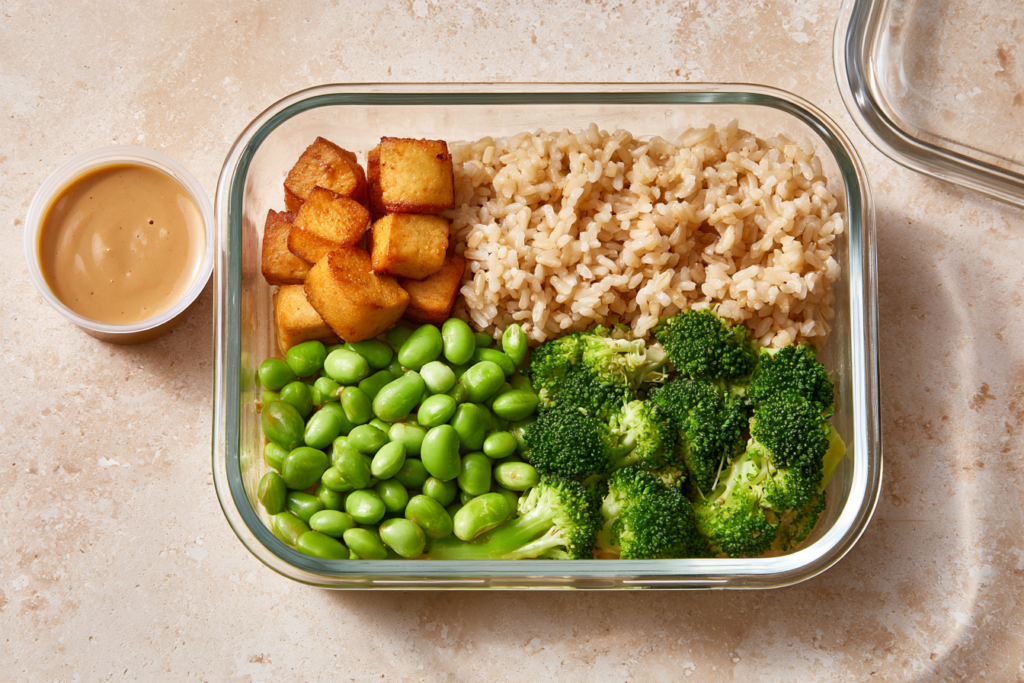
Need a break from chili and curry? A peanut sauce bowl adds a different flavor to your freezer rotation.
The sauce uses pantry ingredients, and frozen shelled edamame adds protein without much chopping. The tofu won’t stay crisp after freezing in sauce, but the bowl should still be satisfying.
Servings: 4
Prep: 20 minutes
Cook: 30–35 minutes
Estimated protein: 29–34 g per serving
Ingredients
- 1 cup (185 g) dry brown rice
- Water as directed on the rice package
- 1 block (14 ounces/397 g) extra-firm tofu, drained, pressed, and cubed
- 1 tablespoon olive oil
- 3 cups (450 g) frozen shelled edamame
- 3 cups (270 g) broccoli florets
- ¼ cup (64 g) smooth peanut butter
- 3 tablespoons reduced-sodium soy sauce
- 2 tablespoons lime juice
- 1 tablespoon maple syrup
- 1 teaspoon garlic powder
- ⅓ cup (80 ml) warm water
Instructions
- Cook the brown rice according to package directions.
- Heat the oven to 400°F. Toss the tofu with the olive oil and spread on a lined baking sheet.
- Bake for 25–30 minutes, turning halfway through.
- Cook the edamame according to its package instructions. Steam the broccoli for 4–5 minutes, until just tender.
- Whisk the peanut butter, soy sauce, lime juice, maple syrup, garlic powder, and warm water until smooth.
- Divide the rice, tofu, edamame, and broccoli equally among four containers. Divide the sauce among four small freezer-safe containers.
Freezing and Reheating
Chill and freeze the bowls and sauce separately. Thaw in the refrigerator. Add 1 tablespoon water to each bowl, cover with a vent, and microwave in short intervals, stirring, until the food reaches 165°F.
Warm the thawed sauce gently, stir well, and spoon it over the bowl.
Easy variation: Use the same weight of frozen green beans instead of broccoli. Keep the tofu and edamame quantities the same to preserve the main protein sources.
7. White Bean, Lentil, and Vegetable Stew
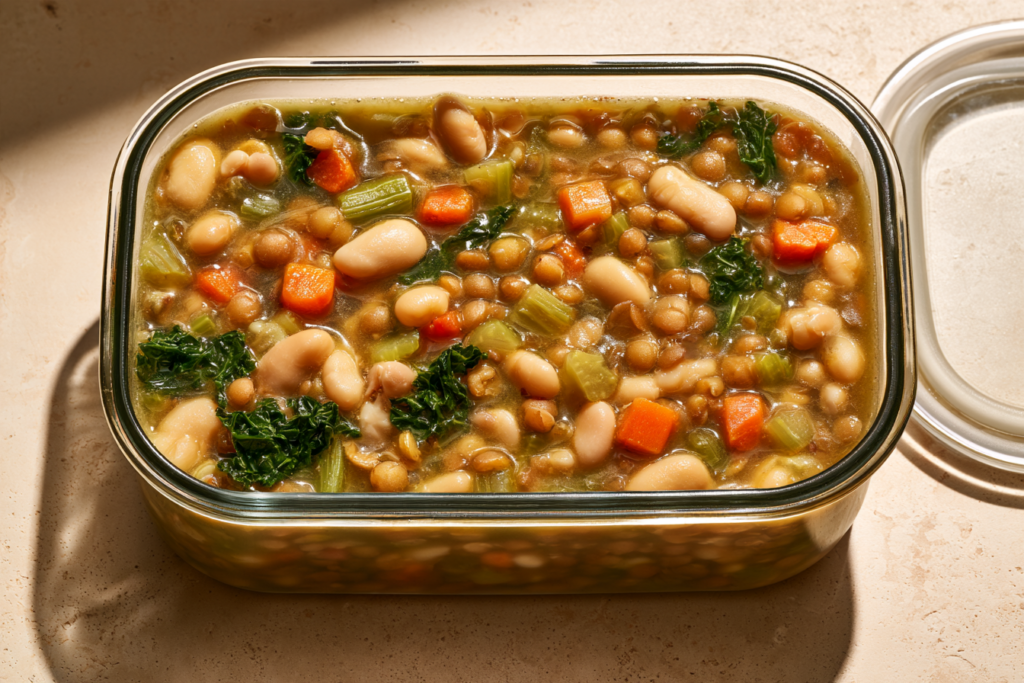
This is the kind of meal that makes a freezer stash feel especially useful on a chilly evening.
White beans give it a creamy texture without cream, while lentils add body. Mash a few spoonfuls of beans into the broth if you prefer a thicker stew.
Servings: 4
Prep: 15 minutes
Cook: 35–40 minutes
Estimated protein: 22–25 g per serving
Ingredients
- 1 tablespoon olive oil
- 1 medium onion, diced
- 2 medium carrots, diced
- 2 celery stalks, diced
- 3 garlic cloves, minced
- 1 teaspoon dried thyme
- ½ teaspoon dried rosemary
- 1 cup (190 g) dry green or brown lentils, rinsed
- 2 cans cannellini beans, drained and rinsed
- 5 cups (1.2 liters) low-sodium vegetable broth
- 3 cups (90 g) chopped kale, tough stems removed
- ½ teaspoon salt
- ¼ teaspoon black pepper
- 1 tablespoon lemon juice
Instructions
- Heat the oil in a large pot over medium heat. Add the onion, carrots, and celery; cook for 7–8 minutes.
- Add the garlic, thyme, and rosemary. Stir for 30 seconds.
- Add the lentils and broth. Bring to a boil, then reduce the heat and simmer partially covered for 25–30 minutes, until the lentils are tender.
- Add the cannellini beans, kale, salt, and pepper. Simmer for another 5–8 minutes.
- Stir in the lemon juice. For a thicker stew, mash a small portion of the beans against the side of the pot.
- Divide into four equal portions.
Freezing and Reheating
Chill promptly, then freeze with headspace in each container. Thaw in the refrigerator and reheat in a saucepan, stirring regularly, until the stew reaches 165°F. Add a little water if the lentils have absorbed much of the broth.
Serving idea: A slice of toast is handy for the last spoonful of broth. Optional bread isn’t included in the protein estimate.
A Simple Vegan Freezer Meal Prep Plan That Won’t Take Over Your Weekend
Start with two recipes, not all seven. Chili and curry are a useful first pair: they share onions and garlic, but taste different enough that dinner won’t feel repetitive.
Cooking both gives you eight portions. Keep only what you’ll eat within three to four days in the refrigerator, and freeze the rest promptly.
Here’s a practical order:
- Set out containers and labels before cooking.
- Chop the onions, peppers, garlic, and other vegetables for both recipes.
- Start the longer-cooking chili first.
- Cook the rice and curry while the chili simmers.
- Portion each finished dish into shallow containers and refrigerate promptly.
- Once chilled, seal, label, and freeze the portions you’re saving.
Next time, try burritos and pasta bake. Those add variety without turning meal prep into a second job.
Make One Frozen Meal Feel Like Three Different Dinners
A freezer meal doesn’t need to look exactly the same every time you serve it.
Use chili in a bowl one night, over a baked potato another night, or as a topping for rice. Add salsa and cabbage to a taco bowl, then use the reheated tempeh mixture in tortillas next time.
Keep a small “finishing kit” in the fridge: lemons or limes, salsa, and a vegetable you enjoy raw. Fresh acidity and crunch can make a reheated meal feel much more complete.
Freeze Portions You’ll Actually Use
If lunch is usually a solo affair, freeze single portions. If you regularly feed two people, freeze two servings together. You’ll spend less time thawing food you didn’t need.
Avoid repeatedly reheating the whole batch. Take out the portion you want and leave the rest cold or frozen.
And rotate your stash. Put new meals behind older ones so the freezer doesn’t become a retirement home for forgotten lentils.
FAQs About High-Protein Vegan Freezer Meals
What are the best high-protein vegan meals to freeze?
Good options include lentil and bean chili, tofu curry, tempeh bowls, tofu-and-bean burritos, and lentil pasta bakes. Meals with a sauce or broth are especially practical because they’re easy to stir and adjust with a little liquid during reheating.
Can you freeze cooked tofu in vegan meal prep?
Yes. Cooked tofu can be frozen in curries, burritos, bowls, and pasta dishes. Its texture may become firmer and more sponge-like after thawing. Expect sauced tofu to stay moist rather than crisp; keep the sauce separate if you want more control over the finished texture.
How long do homemade vegan freezer meals last?
For the recipes here, aim to eat them within two to three months for good quality. Food kept continuously frozen at 0°F remains safe indefinitely, but flavor and texture can decline. Freezing also doesn’t make food safe if it was mishandled before freezing. USDA freezing guidance explains the distinction between safety and quality.
How do you reheat vegan freezer meals without drying them out?
Thaw in the refrigerator when practical, add a small splash of water or broth, and reheat covered. Stir during heating so the center warms evenly, then check for 165°F throughout. Keep toppings separate, and add extra liquid gradually—you can always add more, but soupy burrito filling is harder to rescue.
How can I add more protein to vegan freezer meals?
Increase the tofu, tempeh, beans, or edamame, or use lentil pasta in a pasta-based meal. Make room for the extra ingredients by using a larger pan and adjusting the sauce as needed. For an easy starting point, choose one recipe above, portion it carefully, and check your ingredient labels if you need a more precise protein total.