6 Cheap and Easy Vegan Meals That Make Dinner Less Stressful

Ever open the fridge, stare at a few random ingredients, and wonder how dinner is somehow your responsibility again?
You want something filling. You’d prefer fewer dishes. And you definitely don’t want a recipe that sends you shopping for twelve ingredients you’ll use once.
These cheap and easy vegan meals keep things simple with beans, lentils, pasta, rice, potatoes, and everyday vegetables. There’s no need for pricey meat substitutes or a fully stocked spice collection.
Below, you’ll find six approachable recipes with exact ingredients and clear instructions. Most take about 20–35 minutes, and each makes enough for more than one serving.
You’ll also find ways to reuse ingredients across the recipes, stretch your grocery budget, and turn the basics into meals you’ll actually look forward to eating. Because “budget dinner” shouldn’t automatically mean “a sad bowl of plain rice.”
What Makes a Vegan Meal Affordable and Filling?
A useful starting point is a starch, a protein-containing staple, vegetables, and something flavorful.
Think rice with chickpeas and curry sauce, potatoes with black beans and salsa, or pasta with lentils and tomatoes. These combinations give inexpensive ingredients a job to do instead of leaving you with a plate of disconnected sides.
Beans, lentils, and tofu are especially useful for budget vegan cooking. They can be the main ingredient in a meal rather than an expensive add-on, and they work with lots of different seasonings.
Budget-Friendly Ingredients to Keep on Hand
You don’t need everything on this list. Start with the ingredients for two or three recipes:
- Beans: Chickpeas, black beans, and white beans.
- Lentils: Dry red lentils for quick-cooking sauces.
- Starches: Rice, pasta, oats, tortillas, and potatoes.
- Vegetables: Onions, carrots, cabbage, and frozen mixed vegetables.
- Sauce ingredients: Canned tomatoes, peanut butter, and salsa.
- Seasonings: Curry powder, cumin, smoked paprika, and soy sauce.
Compare unit prices when you shop. A larger package can offer better value, but only if you’ll use it. An enormous bag of something that sits untouched isn’t much of a bargain.
The recipes below use canned beans for convenience. If you already have home-cooked beans, substitute approximately 1½ cups drained cooked beans for each 15-ounce can.
1. One-Pot Tomato and Red Lentil Pasta
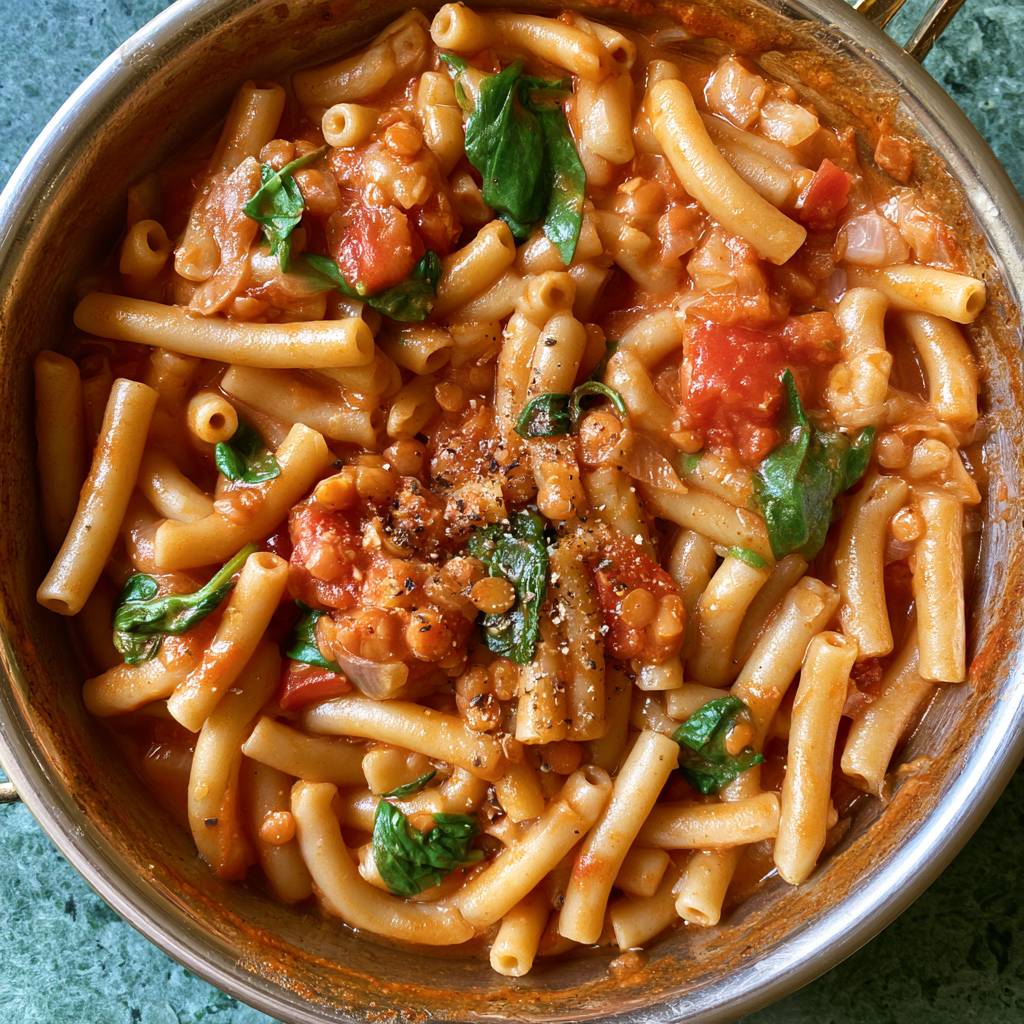
If you want an easy vegan dinner with minimal cleanup, this is a good place to start. Red lentils soften into the tomato sauce, giving it a hearty texture without a separate pot or blender.
The pasta cooks right in the sauce. You’ll need to stir occasionally, but dinner doesn’t require much juggling.
Servings: 4
Prep time: 10 minutes
Cook time: 20–25 minutes
Ingredients
- 1 tablespoon olive oil
- 1 medium yellow onion, finely diced
- 3 garlic cloves, minced
- ¾ cup dry red lentils, rinsed and drained
- 1 can crushed tomatoes, 28 ounces
- 4 cups vegetable broth
- 8 ounces dry short pasta, such as penne or rotini
- 1 teaspoon dried oregano
- ½ teaspoon salt, plus more to taste
- ¼ teaspoon black pepper
- 2 cups loosely packed baby spinach
- Up to 1 cup additional water, added only if needed
Instructions
- Heat the olive oil in a large, heavy pot over medium heat. Add the onion and cook for 5 minutes, stirring occasionally.
- Add the garlic and cook for 30 seconds.
- Stir in the lentils, crushed tomatoes, broth, oregano, salt, and pepper. Bring to a boil, then reduce to a gentle simmer.
- Cover loosely and simmer for 5 minutes.
- Add the pasta. Simmer uncovered for 12–15 minutes, stirring frequently, until the pasta is tender and the lentils are soft. Pasta shapes vary, so start checking at 10 minutes.
- If the mixture becomes thick before the pasta finishes cooking, add water ¼ cup at a time. Keep the pasta mostly submerged while it cooks.
- Stir in the spinach and cook for 1–2 minutes, until wilted. Taste and adjust the seasoning.
Budget swap: Replace the fresh spinach with ½ cup thawed frozen chopped spinach, squeezed of excess liquid.
Make it work for you: The sauce thickens as it stands. Add a splash of water when reheating to bring back its saucy texture.
2. Quick Chickpea and Spinach Curry
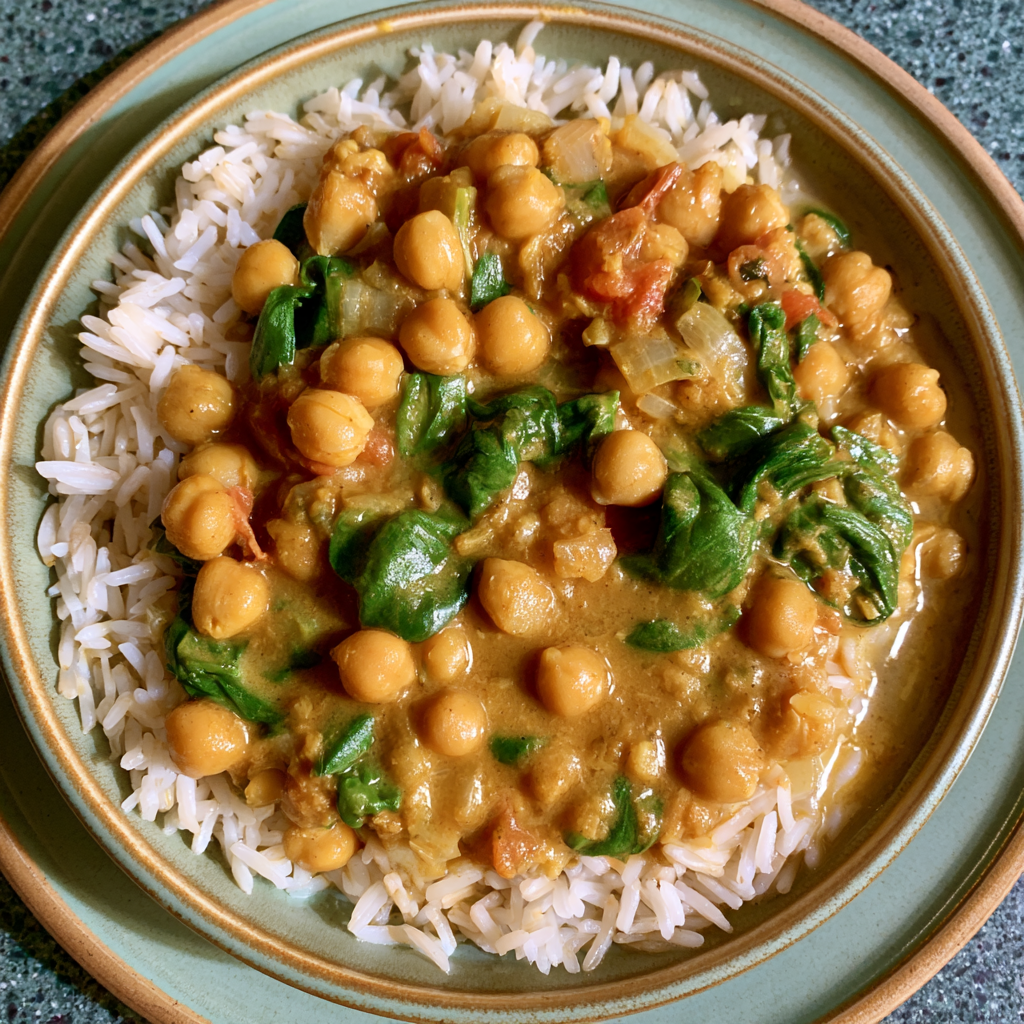
This chickpea curry is creamy, cozy, and straightforward enough for a busy evening. Canned chickpeas do most of the heavy lifting, while curry powder keeps the seasoning list short.
Curry powders differ in strength and heat. Start with the amount below, then taste before adding more.
Servings: 4
Prep time: 5 minutes
Cook time: 20–25 minutes
Ingredients
- 1 cup dry long-grain white rice
- Water for cooking the rice, according to the package
- 1 tablespoon vegetable oil
- 1 medium yellow onion, diced
- 2 garlic cloves, minced
- 2 teaspoons curry powder
- 2 cans chickpeas, 15 ounces each, drained and rinsed
- 1 can diced tomatoes, 14.5 ounces, with their juices
- 1 can light coconut milk, 13.5–14 ounces
- ½ teaspoon salt
- ¼ teaspoon black pepper
- 3 cups loosely packed baby spinach
- 1 tablespoon lemon juice
Instructions
- Cook the rice according to the package instructions.
- Meanwhile, heat the oil in a large skillet over medium heat. Add the onion and cook for 5 minutes.
- Stir in the garlic and curry powder. Cook for 30 seconds.
- Add the chickpeas, tomatoes, coconut milk, salt, and pepper. Stir well.
- Bring to a gentle simmer and cook uncovered for 12–15 minutes, stirring occasionally, until the sauce thickens slightly.
- Stir in the spinach and cook for 2 minutes, until wilted.
- Add the lemon juice. Taste, adjust the seasoning, and divide the curry and cooked rice among four bowls.
Budget swap: Use ¾ cup thawed frozen spinach instead of fresh. Drain it well before adding.
Serving tip: For a thicker curry, mash a small portion of the chickpeas against the side of the skillet and stir them back into the sauce.
3. Black Bean and Potato Taco Skillet
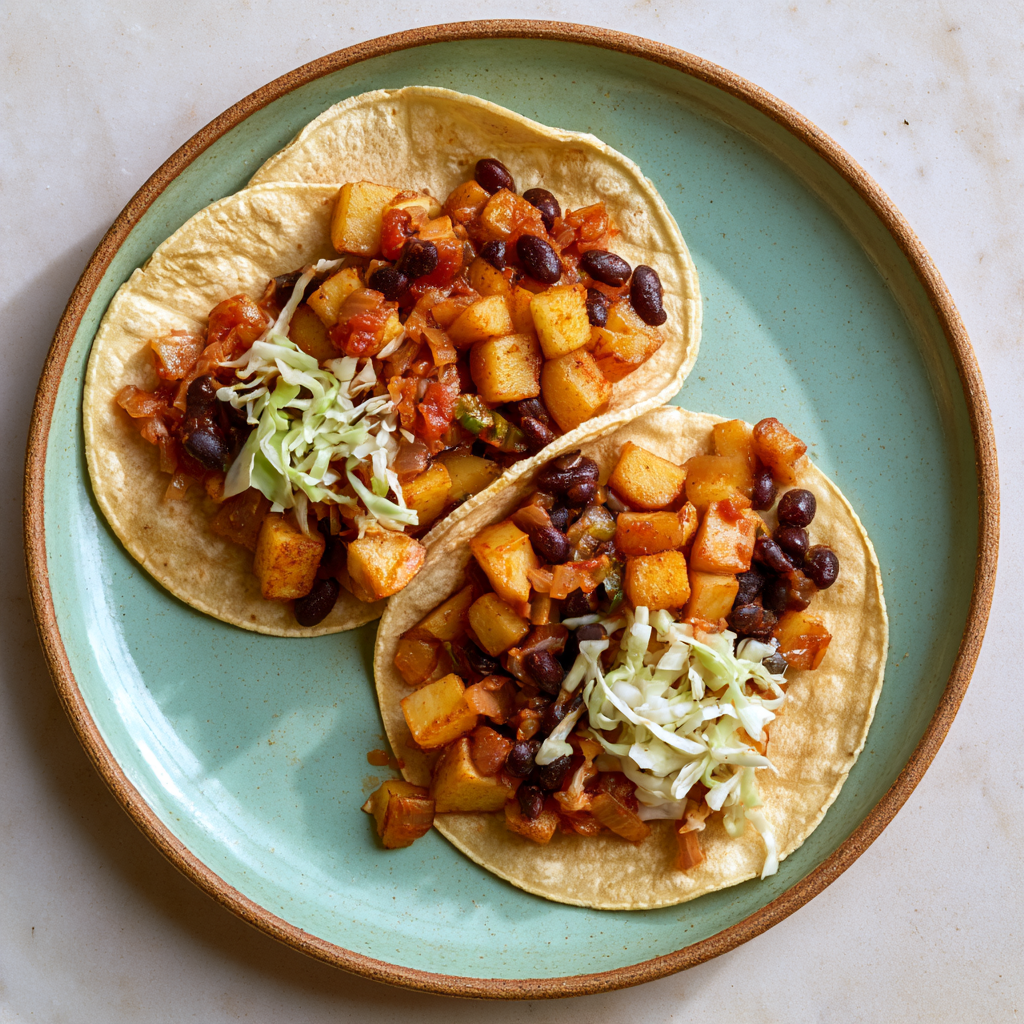
Potatoes make this vegan taco filling substantial, while black beans and salsa bring plenty of flavor. Everything cooks in one skillet before you scoop it into tortillas.
Cut the potatoes into small, even pieces. That little bit of attention saves you from having some pieces fall apart while others stay stubbornly crunchy.
Servings: 4, with 2 small tacos per serving
Prep time: 10 minutes
Cook time: 20–25 minutes
Ingredients
- 1 tablespoon vegetable oil
- 1 pound Yukon Gold or russet potatoes, cut into ½-inch cubes
- 1 medium yellow onion, diced
- ½ cup water, plus ¼ cup more if needed
- 1 teaspoon ground cumin
- 1 teaspoon smoked paprika
- ½ teaspoon salt
- 2 cans black beans, 15 ounces each, drained and rinsed
- ¾ cup vegan salsa
- 8 small corn tortillas
- 2 cups finely shredded cabbage
- 1 tablespoon lime juice
Instructions
- Heat the oil in a large skillet with a lid over medium heat. Add the potatoes and onion. Cook for 5 minutes, stirring occasionally.
- Add ½ cup water, cumin, smoked paprika, and salt. Stir, cover, and reduce the heat to medium-low.
- Cook for 10–15 minutes, stirring halfway through, until the potatoes are fork-tender. If the skillet dries out before they’re cooked, add another ¼ cup water.
- Remove the lid. Add the black beans and salsa, then cook for 5 minutes, stirring occasionally, until hot and any excess liquid has reduced.
- Toss the cabbage with the lime juice in a small bowl.
- Warm the tortillas according to the package instructions.
- Divide the filling among the tortillas and finish with the cabbage.
Budget tip: Cabbage adds crunch without requiring several taco toppings. Save the rest for the peanut noodles below.
Easy variation: Serve the filling over rice if that’s what you have. The recipe doesn’t need tortillas to become dinner.
4. Peanut Noodles with Crunchy Vegetables
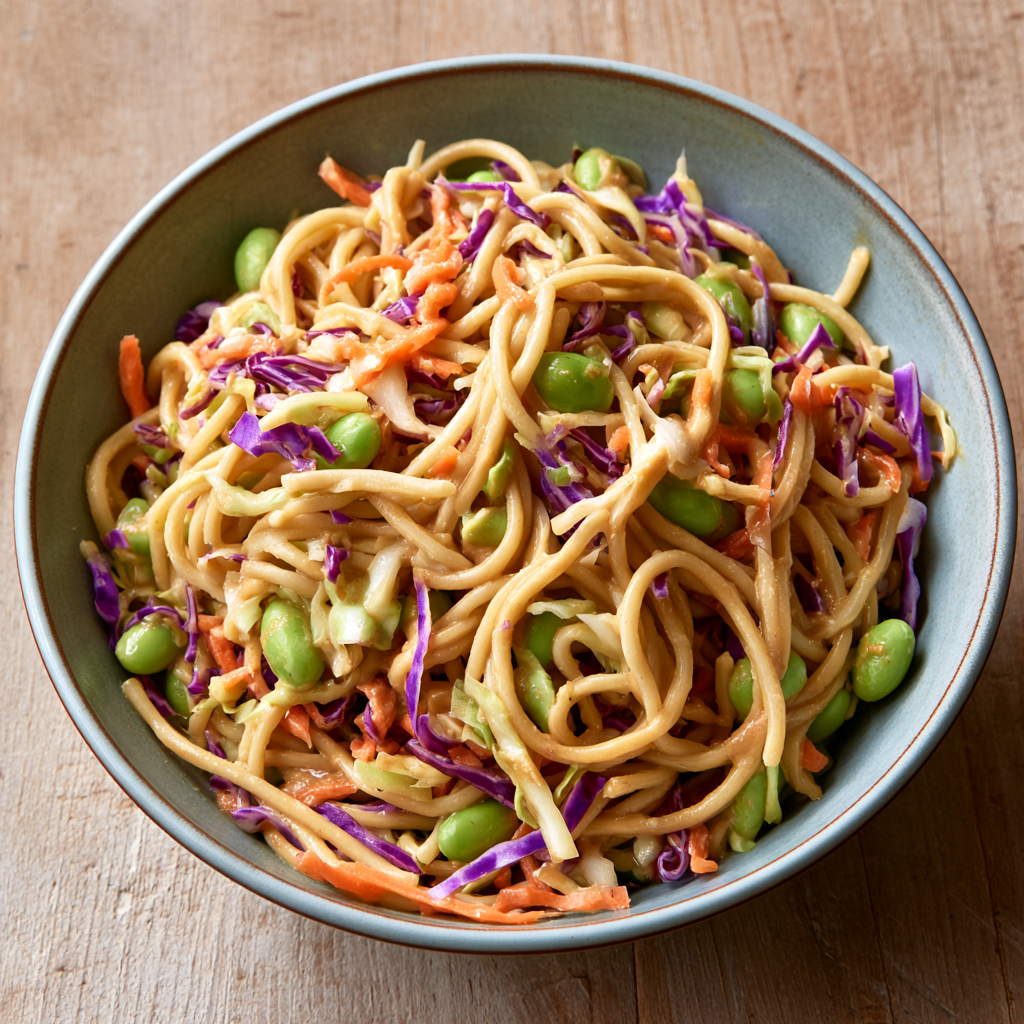
These noodles are a useful answer to the “I need dinner quickly” problem. Regular spaghetti works well, so you don’t need to buy a special noodle just for this recipe.
The sauce starts thick and loosens with warm water. Add the water gradually; you’re aiming for a sauce that coats the noodles rather than pooling underneath them.
Servings: 4
Prep time: 10 minutes
Cook time: 10–12 minutes
Ingredients
- 12 ounces dry spaghetti
- 2 cups frozen shelled edamame
- 2 cups finely shredded cabbage
- 1 large carrot, grated
- ⅓ cup smooth peanut butter
- 3 tablespoons reduced-sodium soy sauce
- 2 tablespoons lime juice
- 1 tablespoon maple syrup or granulated sugar
- 1 garlic clove, finely grated
- ¼–½ cup warm water
Instructions
- Bring a large pot of water to a boil. Add the spaghetti and cook according to the package instructions.
- Add the edamame during the final 4–5 minutes of cooking, following its package directions and extending the cooking time if needed.
- Meanwhile, whisk together the peanut butter, soy sauce, lime juice, maple syrup or sugar, and garlic.
- Whisk in ¼ cup warm water. Add more, 1 tablespoon at a time, until the sauce is smooth and pourable.
- Drain the spaghetti and edamame well, then return them to the pot with the heat turned off.
- Add the cabbage, carrot, and peanut sauce. Toss thoroughly.
- Divide among four bowls and serve.
Budget swap: Replace the edamame with 1½ cups drained cooked chickpeas. Add them to the pasta water for the final minute to warm through.
Texture tip: Shred the cabbage finely so it mixes easily with the noodles. Thick chunks can make the dish awkward to eat.
5. Smoky White Bean and Tomato Skillet
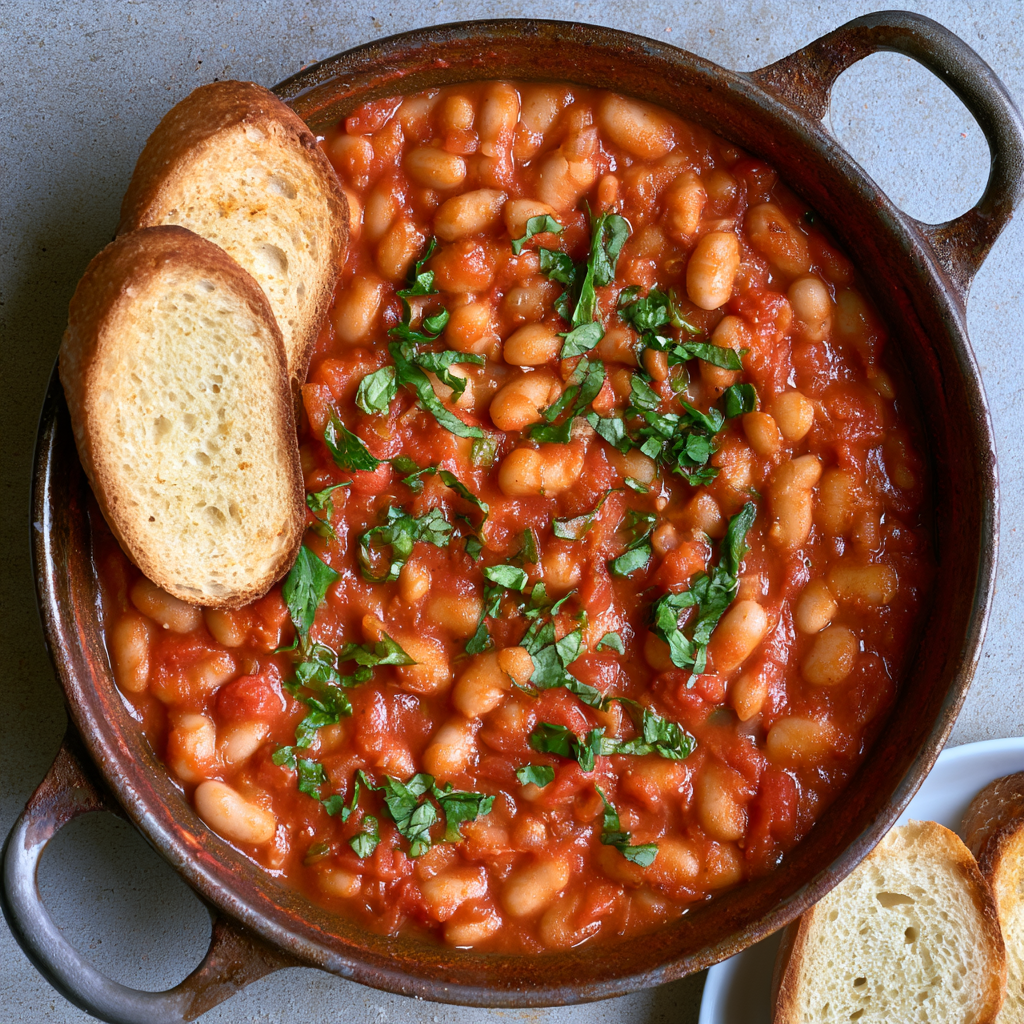
This simple skillet meal uses two cans of beans and a short list of pantry ingredients. White beans turn creamy as they simmer, making the tomato sauce feel richer without cream.
Serve it with toast for scooping. It’s a comforting dinner that doesn’t ask much from you.
Servings: 3
Prep time: 5 minutes
Cook time: 20 minutes
Ingredients
- 1 tablespoon olive oil
- 1 medium yellow onion, diced
- 2 garlic cloves, minced
- 1 teaspoon smoked paprika
- ½ teaspoon dried oregano
- 2 cans cannellini beans, 15 ounces each, drained and rinsed
- 1 can diced tomatoes, 14.5 ounces, with their juices
- ½ cup vegetable broth
- ½ teaspoon salt
- ¼ teaspoon black pepper
- 2 cups loosely packed baby spinach
- 6 slices vegan bread
Instructions
- Heat the olive oil in a large skillet over medium heat.
- Add the onion and cook for 5 minutes, stirring occasionally.
- Add the garlic, smoked paprika, and oregano. Cook for 30 seconds.
- Stir in the beans, tomatoes, broth, salt, and pepper.
- Simmer uncovered for 10–12 minutes, stirring occasionally, until the sauce has thickened.
- Mash about ¼ cup of the beans directly in the skillet, then stir them into the sauce.
- Add the spinach and cook for 2 minutes, until wilted.
- Toast the bread. Divide the beans among three bowls and serve each with two slices of toast.
Budget swap: Great Northern or navy beans work in place of cannellini beans.
Flavor tip: Taste before reaching for more salt. A squeeze of lemon, if you already have one, can brighten a tomato-based sauce.
6. Tofu and Vegetable Fried Rice
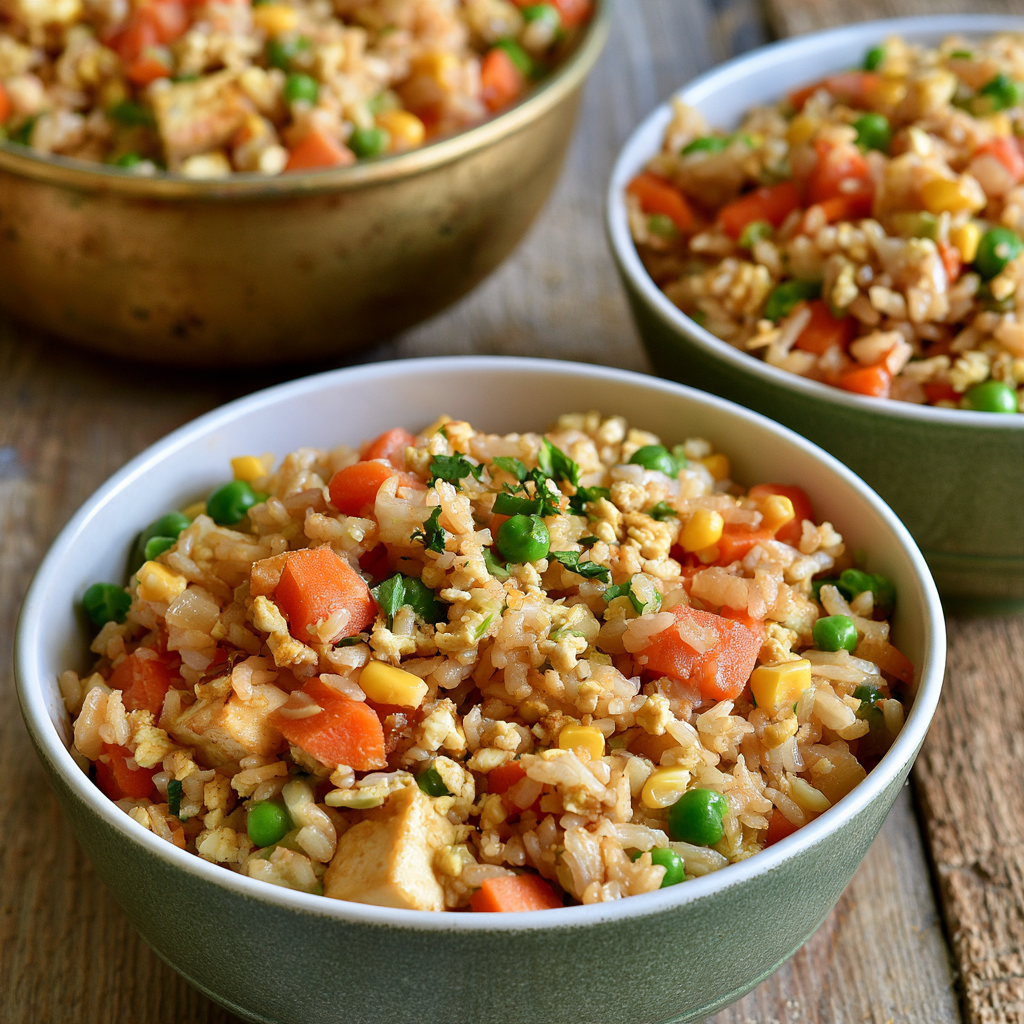
Fried rice is a handy way to turn cooked rice and frozen vegetables into a complete meal. Crumbled tofu mixes throughout the rice, so there’s no need to cut perfect cubes.
Use cold, properly stored cooked rice if you have it. Freshly cooked rice can work, too, but it tends to produce a softer dish.
Servings: 4
Prep time: 10 minutes
Cook time: 15–20 minutes, excluding rice cooking
Ingredients
- 1 block firm tofu, 14 ounces, drained and patted dry
- 2 tablespoons vegetable oil, divided
- 2 garlic cloves, minced
- 3 cups frozen mixed vegetables, such as peas, carrots, and corn
- 4 cups cold cooked rice
- 3 tablespoons reduced-sodium soy sauce
- ¼ teaspoon black pepper
Instructions
- Crumble the tofu into small, bite-size pieces.
- Heat 1 tablespoon oil in a large nonstick skillet or wok over medium-high heat.
- Add the tofu. Cook for 6–8 minutes, stirring occasionally, until some of the moisture evaporates and a few edges turn golden. Transfer to a plate.
- Add the remaining tablespoon of oil to the skillet. Add the garlic and cook for 20–30 seconds.
- Add the frozen vegetables. Cook for 4–6 minutes, stirring, until hot and no longer releasing much water.
- Add the rice, breaking up clumps with your spatula. Cook for 3–4 minutes.
- Return the tofu to the skillet. Add the soy sauce and pepper.
- Stir-fry for another 2–3 minutes, until everything is thoroughly hot. Divide among four bowls.
Budget tip: You don’t need sesame oil, bottled stir-fry sauce, or several garnishes. Garlic and soy sauce give this basic version plenty of flavor.
Pan tip: If your skillet is small, cook the rice mixture in two batches. An overcrowded pan traps steam and makes browning harder.
How to Spend Less on Vegan Meals Without Eating the Same Thing Every Night
The most useful budget trick is to plan around ingredients that overlap.
The pasta, curry, and white bean skillet all use onions, garlic, and spinach. The tacos and noodles both use cabbage. Rice works alongside the curry, under the taco filling, and in the fried rice.
That overlap gives you variety without requiring a completely different grocery list for every dinner.
Choose Three Recipes Before You Shop
Start with the chickpea curry, black bean tacos, and tofu fried rice. Together, they make 12 servings, which you can divide between dinners and lunches according to your household’s needs.
Write down the ingredients, check your kitchen, and cross off what you already have. It’s a small step, but buying a second bottle of soy sauce while forgetting the tofu is a very specific kind of grocery frustration.
Choose the other recipes for a later shop rather than buying ingredients for all six at once. The goal is usable food, not an ambitious fridge full of good intentions.
Use the Whole Ingredient
If you buy cabbage for tacos, plan peanut noodles or a simple cabbage slaw later in the week.
If a bag of spinach is larger than you need, use it in another cooked meal while it’s still fresh, or choose frozen spinach when that better fits your schedule.
Have half an onion left? Dice it for your next skillet meal. Small leftovers are easier to use when you already know where they’re going.
Compare Cost per Serving at Your Own Store
These recipes use budget-oriented staples, but exact prices depend on your location, package sizes, and what’s on sale.
To estimate a recipe’s cost, add the cost of the amounts you actually use, then divide by the number of servings. Count a tablespoon of oil rather than charging the entire bottle to one dinner.
Also consider the upfront grocery total. A recipe can have a low cost per serving while still requiring you to buy several pantry items that week. Start with meals that use what you already own.
Keep a Backup Dinner You Can Make Without Thinking
Pick one meal from this list and keep its shelf-stable ingredients on hand. The white bean skillet is an easy option: canned beans, canned tomatoes, seasoning, and bread from the freezer.
Fresh spinach is nice, but you can leave it out when the fridge is bare. Having one dependable backup makes it easier to get dinner on the table when your original plan falls apart.
You don’t need to cook six new recipes this week. Choose one that sounds good, make enough for your household, and build from there.
FAQs About Cheap and Easy Vegan Meals
What are the cheapest vegan meals to make?
Meals built around beans, lentils, rice, pasta, and potatoes are useful low-cost options. Try lentil pasta, black bean tacos, chickpea curry, or white beans on toast. The cheapest choice for you will usually use ingredients you already have, along with reasonably priced staples at your local store.
What can I make for a quick vegan dinner?
Peanut noodles, white bean skillets, and tofu fried rice are practical quick vegan dinners. Canned beans and frozen vegetables reduce preparation time. Fried rice is fastest when you already have cooked rice available.
How do I make vegan meals filling on a budget?
Combine a protein-containing ingredient, such as beans, lentils, or tofu, with rice, pasta, potatoes, or bread. Add vegetables and a flavorful sauce. Adjust the portion to your appetite; a small vegetable side dish may need beans and a starch to become a satisfying main meal.
Are canned beans or dried beans better for budget cooking?
Dried beans can offer a lower cost per cooked serving, while canned beans save time and make last-minute meals easier. Compare local prices and choose the option you’ll realistically use. Both work well in budget vegan meals.
Can I make these vegan meals without expensive meat substitutes?
Yes. These recipes use beans, lentils, tofu, edamame, and peanut butter instead of packaged vegan meat substitutes. Everyday staples can form the center of the meal, with spices, tomatoes, salsa, or a simple sauce providing flavor.