
Decaf Non-Alcoholic Espresso Martini Recipe With a Foamy Top

Love the idea of an espresso martini after dinner, but don’t want the alcohol or a full-strength coffee buzz? This decaf non-alcoholic espresso martini brings together bold coffee flavor, a little sweetness, and that lovely foamy top in a drink you can make at home in minutes.
It feels fancy enough for a dinner party, yet the ingredient list is refreshingly simple. There’s no vodka, no coffee liqueur, and no expensive alcohol-free spirit required. Just decaf espresso, a few pantry ingredients, ice, and a good shake.
The result is a chilled coffee mocktail with a smooth, lightly sweet flavor. Pour it into a coupe glass, add a little cocoa, and suddenly an ordinary evening has a very nice finishing touch.
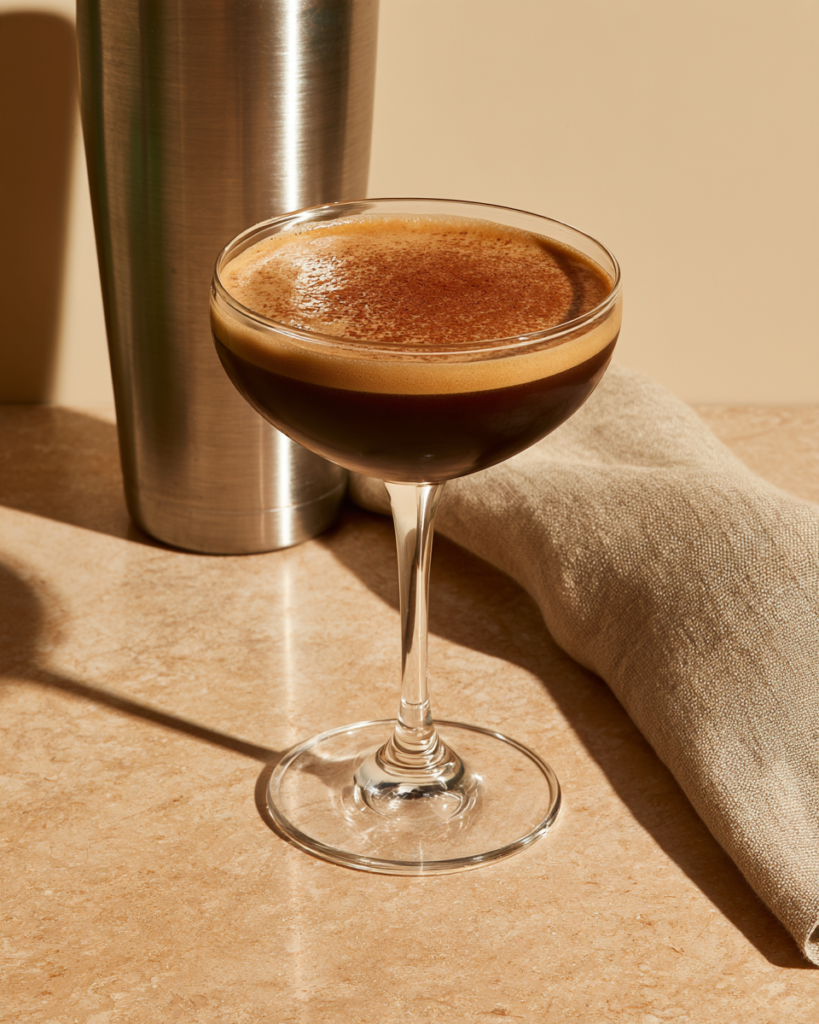
What Is a Decaf Non-Alcoholic Espresso Martini?
A traditional espresso martini typically contains vodka, coffee liqueur, espresso, and sometimes sugar syrup. This version skips the alcoholic ingredients and uses decaf espresso as its coffee base.
To replace some of the sweetness and flavor normally provided by coffee liqueur, the recipe includes maple syrup, vanilla, and a small amount of cocoa powder. A splash of oat milk adds body without turning the drink into a full-size iced latte.
Think bold, chilled coffee with a soft, creamy edge. It’s still coffee-forward, with enough sweetness to round out the espresso.
One detail matters: decaffeinated coffee generally contains some residual caffeine. This is a lower-caffeine espresso mocktail, rather than a guaranteed caffeine-free drink.
Why You’ll Love This Decaf Espresso Martini Mocktail
There’s a lot to like about a drink that looks this polished and takes about five minutes to prepare.
- No alcohol required: You don’t need vodka, coffee liqueur, or an alcohol-free spirit.
- Easy to customize: Adjust the sweetness, milk, or chocolate flavor to suit your taste.
- Naturally dairy-free with oat milk: The base recipe uses unsweetened oat milk.
- Made with everyday ingredients: Most of the flavor comes from coffee and pantry staples.
- Perfect for individual servings: Make one whenever you want a small after-dinner treat.
My favorite suggestion? Chill the glass before you start. It’s such a small step, but that frosty first sip makes the whole drink feel more special.
Decaf Non-Alcoholic Espresso Martini Recipe
This recipe makes one approximately 4-ounce drink before dilution from shaking. Serve it in a small coupe or martini glass.
Prep time: 5 minutes
Cook time: None, apart from brewing the espresso
Servings: 1
Ingredients
- 2 fluid ounces (60 ml) freshly brewed decaf espresso, cooled briefly
- 1 fluid ounce (30 ml) unsweetened oat milk
- ½ fluid ounce (15 ml / 1 tablespoon) pure maple syrup
- ½ fluid ounce (15 ml / 1 tablespoon) cold water
- ⅛ teaspoon alcohol-free vanilla extract or vanilla flavoring
- ⅛ teaspoon unsweetened cocoa powder
- 1 cup ice cubes, for shaking
- A light dusting of cocoa powder, optional, for garnish
Optional sweetness adjustment: Add another ½ teaspoon maple syrup after tasting if you prefer a sweeter drink.
Equipment
- Espresso machine or another method for making concentrated decaf coffee
- Cocktail shaker
- Measuring spoon and small liquid measure or jigger
- Fine-mesh strainer, optional
- Small coupe or martini glass
Instructions
- Chill your glass. Place the glass in the freezer while you prepare the ingredients, or fill it with ice water and set it aside.
- Brew the decaf espresso. Measure 2 fluid ounces. Let it cool for a few minutes so it’s warm rather than piping hot.
- Dissolve the cocoa. Stir the cocoa powder into the warm espresso until no dry clumps remain. Stir in the maple syrup.
- Fill the shaker. Add the coffee mixture, oat milk, cold water, and alcohol-free vanilla. Add 1 cup of ice.
- Shake vigorously. Secure the lid and shake hard for 15–20 seconds. The outside of the shaker should feel very cold.
- Strain into the glass. Empty any ice water from your chilled glass. Strain the drink into it, using a fine-mesh strainer if you want to catch tiny ice chips.
- Garnish and serve immediately. Add a very light dusting of cocoa powder, if desired. Enjoy while the drink is cold and the foam is fresh.
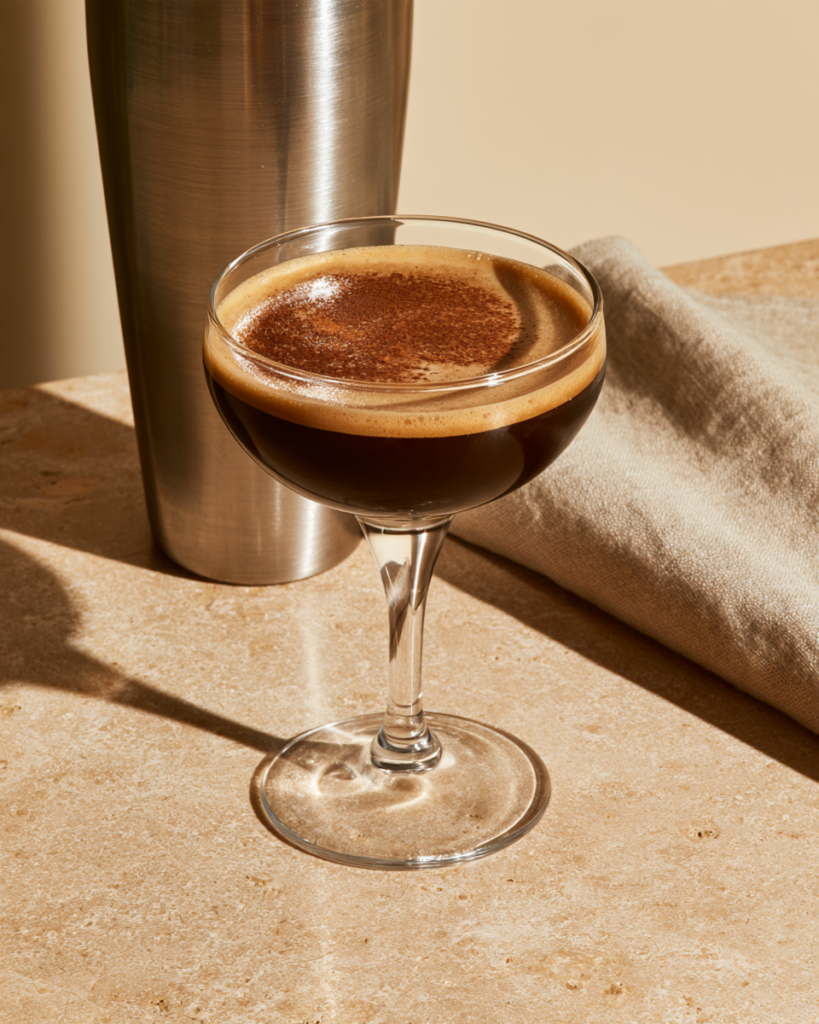
What to expect: A lightly creamy, coffee-forward mocktail with a foamy layer. Foam thickness varies with your espresso, milk, ice, and shaking technique.
Ingredient Tips for the Best Flavor
Use Decaf Coffee You Enjoy Drinking
Coffee does most of the work here, so choose a decaf you like on its own. A medium or dark roast with chocolate or nutty notes works nicely with the maple syrup and cocoa.
If the coffee tastes harsh or burnt before mixing, the other ingredients won’t completely hide it. On the other hand, very weak coffee can disappear behind the milk and melting ice.
Aim for a small amount of concentrated, flavorful coffee.
Choose Unsweetened Oat Milk
Unsweetened oat milk adds a little body while letting you control the sweetness. Shake the carton before measuring.
A barista-style oat milk can give a richer result, although brands differ in sweetness and texture. Almond milk also works, but the drink may feel thinner. Dairy milk is another option if that suits your preferences.
Avoid using a large splash of milk without adjusting the other ingredients. Too much can soften the coffee flavor considerably.
Keep the Cocoa Subtle
The cocoa isn’t meant to turn this into a chocolate martini. That tiny ⅛ teaspoon adds a gentle chocolate note alongside the espresso.
Stirring it into warm coffee first helps prevent powdery clumps. Nobody wants a surprise cocoa pocket in an otherwise smooth drink.
Check the Vanilla Label
For a drink made without alcoholic ingredients, use vanilla specifically labeled alcohol-free. Standard vanilla extract commonly contains alcohol.
The same label check applies if you add flavored syrups, cocktail bitters, or an alcohol-free spirit. Product formulations vary, so choose ingredients that meet your preferences.
How to Get a Foamy Top Without Alcohol
The foam is part of the fun. Fortunately, you don’t need vodka to create it.
Fresh espresso, a little milk, and vigorous shaking can produce an attractive layer of bubbles. Still, a homemade mocktail won’t always have the exact texture of a bar-made espresso martini.
Start With Freshly Brewed Espresso
Fresh espresso is a good starting point for foam, especially when it has some crema. Decaf espresso can work well, although the result depends on the beans and brewing method.
Let it cool briefly before shaking. Very hot coffee melts ice quickly and can leave the finished drink watery.
Shake With Energy
A gentle swirl won’t do much. Shake firmly for the full 15–20 seconds so the ingredients chill and aerate.
Use a securely closed shaker with enough room for the liquid and ice to move. If it’s packed completely full, shaking becomes less effective.
Pour and Serve Right Away
Foam gradually settles. Have your glass and garnish ready before you shake so you can pour immediately.
A thin foamy layer is still a perfectly good result. Flavor comes first, and this drink should taste enjoyable even after the bubbles fade.
How to Make It Without an Espresso Machine
No espresso machine? You can still make a decaf coffee martini mocktail.
Decaf Instant Coffee Method
Dissolve 2 teaspoons decaf instant coffee or instant espresso powder in 2 fluid ounces (60 ml) hot water. Let it cool briefly, then use it in place of the espresso.
Strength varies by brand, so adjust the amount of coffee powder if needed. The finished drink may have less foam than one made with freshly pulled espresso.
Strong Brewed Decaf Method
Use 2 fluid ounces (60 ml) strongly brewed decaf coffee in place of the espresso.
A moka pot or AeroPress can make concentrated coffee that works well here. Regular drip coffee is usable, but a standard-strength brew may taste mild once shaken with ice and milk.
Decaf Cold Brew Method
Use 2 fluid ounces (60 ml) decaf cold brew concentrate, adjusting the strength according to the product directions and your taste.
Because it’s already cold, it’s convenient for quick preparation. Expect a somewhat different flavor and potentially a thinner foam layer.
Easy Flavor Variations
Once you’ve tried the base recipe, small changes can take it in a new direction.
Decaf Mocha Martini Mocktail
Increase the cocoa powder to ½ teaspoon and increase the maple syrup to 2 teaspoons plus ½ tablespoon, or simply 1 tablespoon plus ½ teaspoon.
Dissolve the cocoa thoroughly in the warm coffee. Taste before shaking and adjust the sweetness if needed.
Vanilla Decaf Espresso Mocktail
Increase the alcohol-free vanilla from ⅛ teaspoon to ¼ teaspoon.
This gives the drink a more noticeable vanilla flavor without adding another syrup. It’s especially nice if your decaf has a dark, roasty character.
Cinnamon Coffee Martini Mocktail
Add a small pinch of ground cinnamon to the warm coffee mixture.
Keep it light. A little cinnamon is cozy; too much can leave a dusty texture. For an even subtler finish, use cinnamon only as a garnish.
Less-Sweet Espresso Martini Mocktail
Reduce the maple syrup to 2 teaspoons.
Shake the drink, taste it, and add a little more syrup only if needed. Coffee bitterness and personal preferences vary, so there’s no prize for sticking with a sweetness level you don’t enjoy.
For more drinks built around unsweetened mixers, explore these low-sugar mocktails.
Make-Ahead Tips for Entertaining
You can prepare the coffee mixture ahead, but save the shaking for serving time.
For four servings, combine:
- 8 fluid ounces (240 ml) decaf espresso
- 4 fluid ounces (120 ml) unsweetened oat milk
- 2 fluid ounces (60 ml) maple syrup
- 2 fluid ounces (60 ml) cold water
- ½ teaspoon alcohol-free vanilla
- ½ teaspoon unsweetened cocoa powder
Dissolve the cocoa and maple syrup in the warm espresso first, then add the remaining ingredients. Cover and refrigerate promptly until serving.
For the best flavor and texture, prepare the mixture the same day. Stir well before measuring 4 fluid ounces of mixture per serving, then shake each portion with fresh ice. Shaking one or two servings at a time gives the ingredients room to move.
Serve a big-batch party mocktail alongside the espresso drinks so guests can help themselves between freshly shaken servings.
What to Serve With a Decaf Espresso Martini
This drink pairs naturally with small desserts and simple after-dinner treats.
Try it with chocolate-covered strawberries, shortbread, almond cookies, or a square of dark chocolate. A small slice of cheesecake also works if you want something richer.
Because the mocktail already has sweetness and coffee flavor, you don’t need an elaborate dessert spread. A few cookies on a plate can do the job beautifully.
For a date-night drink menu, pair this coffee option with one of these Valentine’s Day mocktails.
More Alcohol-Free Drinks for Special Occasions
- 5 Sleepy Girl Mocktails With Tart Cherry — adult evening drinks with optional magnesium.
- 8 New Year’s Eve Mocktails
- 10 Sparkling Brunch Mocktails
Explore all 300+ easy mocktail recipes for every season and occasion.
Frequently Asked Questions
Does a decaf espresso martini contain caffeine?
Yes, it generally contains some caffeine because decaffeinated coffee isn’t completely caffeine-free. The amount depends on the coffee and how it’s prepared. This recipe uses decaf to reduce caffeine, rather than eliminate it.
How do you make an espresso martini without alcohol?
Replace the vodka and coffee liqueur with a mixture of concentrated coffee, a little sweetener, and ingredients that add flavor and body. This recipe uses decaf espresso, oat milk, maple syrup, cocoa, water, and alcohol-free vanilla.
Can I make a non-alcoholic espresso martini without a cocktail shaker?
Yes. A sturdy, food-safe container with a tight, leakproof lid can work. Cool the coffee before adding it, leave plenty of room for the ice to move, and check that the lid is secure. Avoid shaking hot liquid in a sealed container.
Why is my espresso martini mocktail watery or not foamy?
Watery results often come from weak coffee, very hot espresso melting the ice, or letting the drink sit too long before serving. For better foam, use concentrated coffee, shake vigorously with solid ice cubes, and pour immediately into a chilled glass.
The most useful adjustment is to change one thing at a time. Start with the recipe as written, then note whether you’d like stronger coffee, less sweetness, or more creaminess. Once you find your preferred balance, you’ve got an easy little house mocktail ready for the next dinner party—or the next evening that could use a fancy glass.